What makes a meme coin worth trading rather than holding as a long-term bet
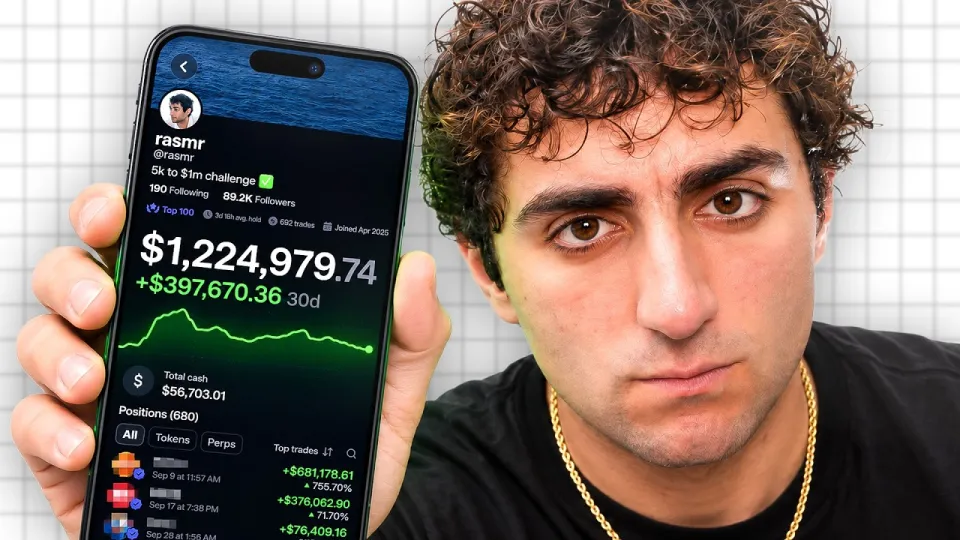
Video: 5 Years of Memecoin Knowledge in 12 Minutes
Want articles like this for your own video to promote it on YouTube and Google? Order them through the Telegram bot @sat_sit_bot. It writes articles around your video, embeds the video and publishes them on popular niche websites (no ads). Your first 50 articles are free.
· based on the channel rasmr
Key takeaways
- Meme coins are narrative-driven: price usually follows attention, not cash flow or earnings.
- Market cap, not unit price, is the reference point for judging upside and where holders start selling.
- Early access comes from launch circles and community channels, which is why insiders often buy before public listings.
- Most losses come from emotion: averaging down a loser, refusing to sell a winner, and buying after a vertical candle.
- Position sizing and a written exit plan matter more than picking the single best ticker.
A meme coin is a crypto token whose value rests almost entirely on narrative, community and attention rather than on revenue or product usage, so the right way to treat it is as a short-cycle trade with strict risk limits, not as a long-term investment. Anyone approaching this market should start with a clear exit plan and a small position size, and can test the waters through a trading platform registration via fomo.family.
What a meme coin actually is and why price moves so fast
A meme coin has no cash flow to discount, so its price is a running vote on how many people will buy the story next. That single fact explains almost every behaviour you see: vertical candles on a tweet, 80% drawdowns in a day, and liquidity that evaporates when the crowd turns.
The mechanics behind the speed:
- Supply is usually huge and fully circulating, so unit price is meaningless — a token at $0.000004 can still be worth hundreds of millions.
- Liquidity is thin relative to market cap, which means modest buy or sell orders move the chart several percent.
- Launches are permissionless, so new tickers appear by the thousand and compete for the same pool of attention.
- Narratives rotate fast — a theme that worked last week can be dead by the weekend.
Because of this, the useful question is never "will this coin go up" but "who is going to buy after me, and why". If you cannot answer that in one sentence, you are the exit liquidity.
The metrics that matter before you enter a position
Market cap is the number to read first, because it tells you how much upside is realistically left and where earlier buyers sit. A token at a $2 million cap needs a completely different thesis from one at $200 million, even if both charts look identical.
The checklist worth running on every ticker:
- Market cap and fully diluted value — if FDV is many times the current cap because of locked tokens, future unlocks are a supply overhang.
- Holder distribution — a handful of wallets holding a large share can dump on you at any moment.
- Liquidity depth — check how much can be sold without collapsing the price; a thin pool means your exit is theoretical.
- Launch source — who released the token and where it was announced first tells you who got the cheapest entries.
- Narrative freshness — a theme on its third or fourth copy is late-cycle, not early.
Unit price is the metric retail traders watch and professionals ignore. A coin trading at a fraction of a cent is not "cheap"; it is simply a supply decision.
How early access and launch circles shape the odds
Being early is the single largest edge in meme coin trading, and early access rarely comes from public charts. Tokens are frequently announced inside private or semi-private community groups before any public launch, which is exactly why connected participants buy at the lowest cap and retail arrives at the top of the first candle.
The realistic takeaway for someone outside those circles:
- Accept that you will usually be later than insiders, and price your entries accordingly.
- Treat a token already up several multiples as a momentum trade with a tight stop, not as an early find.
- Watch where the announcement originated — a launch pushed only by paid callers has a different risk profile from one with an organic community.
- Do not assume a private group is a guarantee; the same access that lets members buy early lets them sell into you.
Understanding that structure removes a lot of frustration. You are not failing to find gems; you are competing with people who saw the ticker before it existed publicly.
Position sizing and exit discipline that survive a bad week
The traders who last are not the ones with the best picks but the ones who cap the damage from the bad ones. Two rules do most of the work: never risk more than you can lose without changing your behaviour, and decide your exit before you enter.
A workable structure:
- Split entries — take a starter position and add only if the thesis confirms, never because the price dropped.
- Scale out on the way up — selling a portion at the first strong move removes the pressure to time the top perfectly.
- Set invalidation in advance — know the market cap or price level at which you admit the trade is wrong.
- Avoid leverage — thin liquidity plus borrowed money is the fastest route to a wiped account.
- Log every trade — entry reason, exit reason, outcome; patterns appear within a few dozen trades.
Selling a winner is psychologically harder than cutting a loser for many people, yet round-tripping a large unrealised profit back to zero is the most common regret in this market. A partial sale is not a lack of conviction; it is the price of staying in the game.
The emotional traps that turn profits into round trips
Almost every large loss in meme coins traces back to a feeling rather than a missing fact. The pattern repeats across experience levels, and naming it is the first defence.
The most expensive habits:
- Hoping on a loser — holding a position because the chart "should" bounce, long after the narrative died.
- Greed on a winner — watching a position multiply and refusing to take anything off the table.
- Buying the excitement candle — entering after a vertical move because it looks like it will continue.
- Revenge trading — trying to win back a loss immediately with a bigger size.
- Confusing conviction with stubbornness — a thesis has an expiry, and attention moves on.
A useful discipline is to write the exit plan down before buying and treat the written plan as the only version of you allowed to make decisions. The version of you watching a green candle is not a reliable decision-maker.
Common questions from newer meme coin traders
Newcomers tend to ask the same handful of things, and the answers are more practical than technical. Three themes come up constantly: how to spot a token that will collapse, whether a small account can participate at all, and whether a coin tied to a popular brand or upcoming release is a good buy.
On collapses: there is no perfect detector, but concentrated holders, unlocked supply, thin liquidity and a launch pushed only by paid promotion are the recurring ingredients. On small accounts: starting small is not a disadvantage, because the skills — sizing, exits, reading market cap — transfer directly to larger size later. On brand-themed tokens: a recognisable name is a marketing hook, not a fundamental, and the same narrative can be launched and abandoned many times.
Useful links
Final thoughts
The meme coin market rewards process far more than prediction: read market cap before price, assume you are later than the insiders, and size positions so a bad week is survivable. The traders who compound are the ones who sell into strength, cut dead narratives quickly and keep emotion out of execution. This breakdown draws on the perspective of the rasmr channel, whose condensed overview of meme coin trading covers narratives, launch dynamics and exit discipline. Treat any single video or call as one input among many, verify the numbers yourself, and remember that in this corner of crypto the exit is the trade.
Not financial advice. Meme coins are highly volatile and most of them go to zero.
Source: 5 Years of Memecoin Knowledge in 12 Minutes · Markdown version
Questions & answers
How do I tell whether a meme coin is likely to collapse?
There is no guaranteed signal, but concentrated holder distribution, large locked or unlocked supply relative to the current market cap, thin liquidity and promotion driven only by paid callers are the recurring warning signs. If you cannot identify who released the token and where it was first announced, treat the risk as high.
Can I start trading meme coins with a small amount of capital?
Yes, and starting small is arguably the better path because the skills involved — position sizing, reading market cap, executing an exit plan — are identical at any account size. Small size also limits the cost of the emotional mistakes nearly everyone makes early on.
Should I hold a meme coin that is already up several times?
A large unrealised gain is not a reason to keep holding everything; scaling out a portion locks in the result and removes the pressure to time the exact top. Round-tripping a big profit back to zero is one of the most common regrets in this market.
Is a coin named after a popular brand or upcoming release a good investment?
A recognisable name is a marketing hook, not a fundamental, and similar themed tokens get launched and abandoned repeatedly. Judge it on the same criteria as any other meme coin: market cap, holder concentration, liquidity and whether the narrative still has fresh buyers behind it.